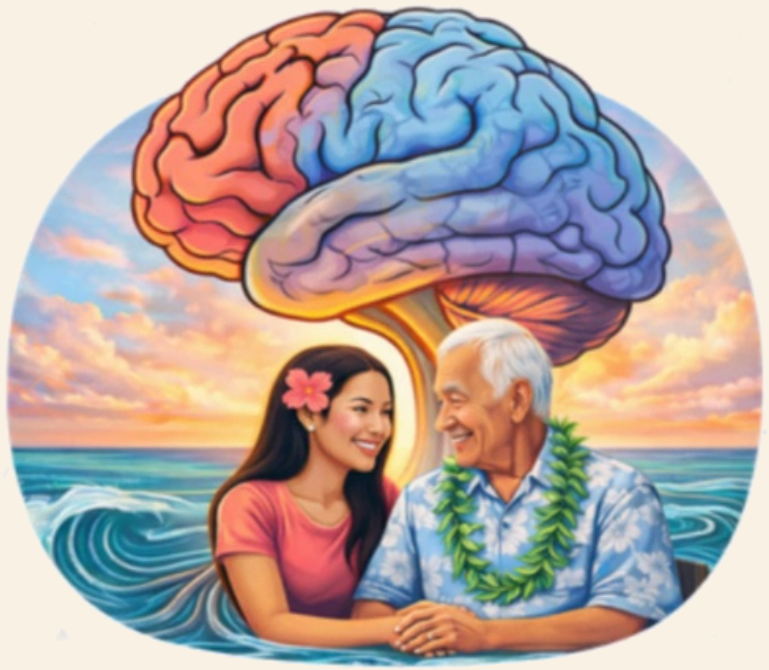
E komo mai, welcome
Mālama: to care for, to protect, to preserve.
That word is the whole idea behind this initiative. We care for the minds of Hawaiʻi's kūpuna by making room for them: for their stories, their knowledge, and their company. And we bring students and kūpuna together to do it.
Our mission
To mālama the minds of Hawaiʻi's kūpuna by fostering cognitive engagement, meaningful connection, and intergenerational relationships between students and kūpuna that support brain health and strengthen our communities.
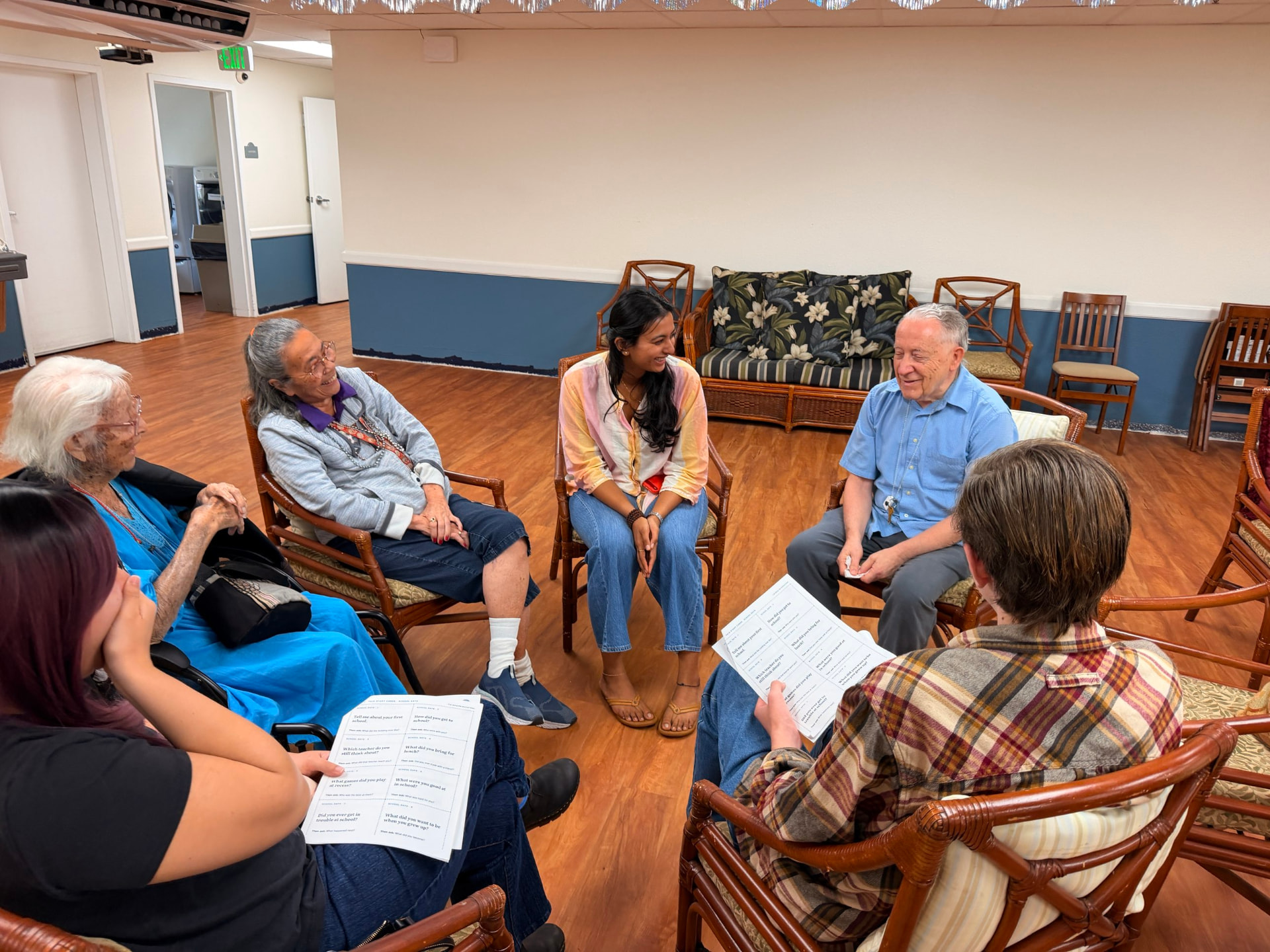
Statewide across Hawaiʻi, college and high school students meet with kūpuna for one hour a week. Many kūpuna experience memory loss, loneliness, and fewer chances for meaningful social engagement, while students rarely get to learn from them. Research shows mental stimulation and social connection make a real difference, so we built a program around something as simple as sitting down to talk story.
What guides us
Three things we keep coming back to
Prevention starts earlier
Brain health is built in everyday conversation and connection, not only in a clinic visit.
Care follows geography
On our islands, distance, culture, and resources shape who gets support, so we bring sessions to where kūpuna already are.
Whole-person, community-driven
Sessions are culturally grounded and led by the people in the room, not a script handed down.
In collaboration with
We don't do this alone
Mālama the Mind is developed alongside organizations already leading dementia and aging work across the islands, so the program is grounded in statewide guidance rather than invented from scratch.
A statewide coalition of people across Hawaiʻi passionate about all things dementia, working to make the islands more dementia friendly.
Executive Office on AgingHawaiʻi State Department of Health, the lead agency coordinating the statewide system of aging and caregiver support services.
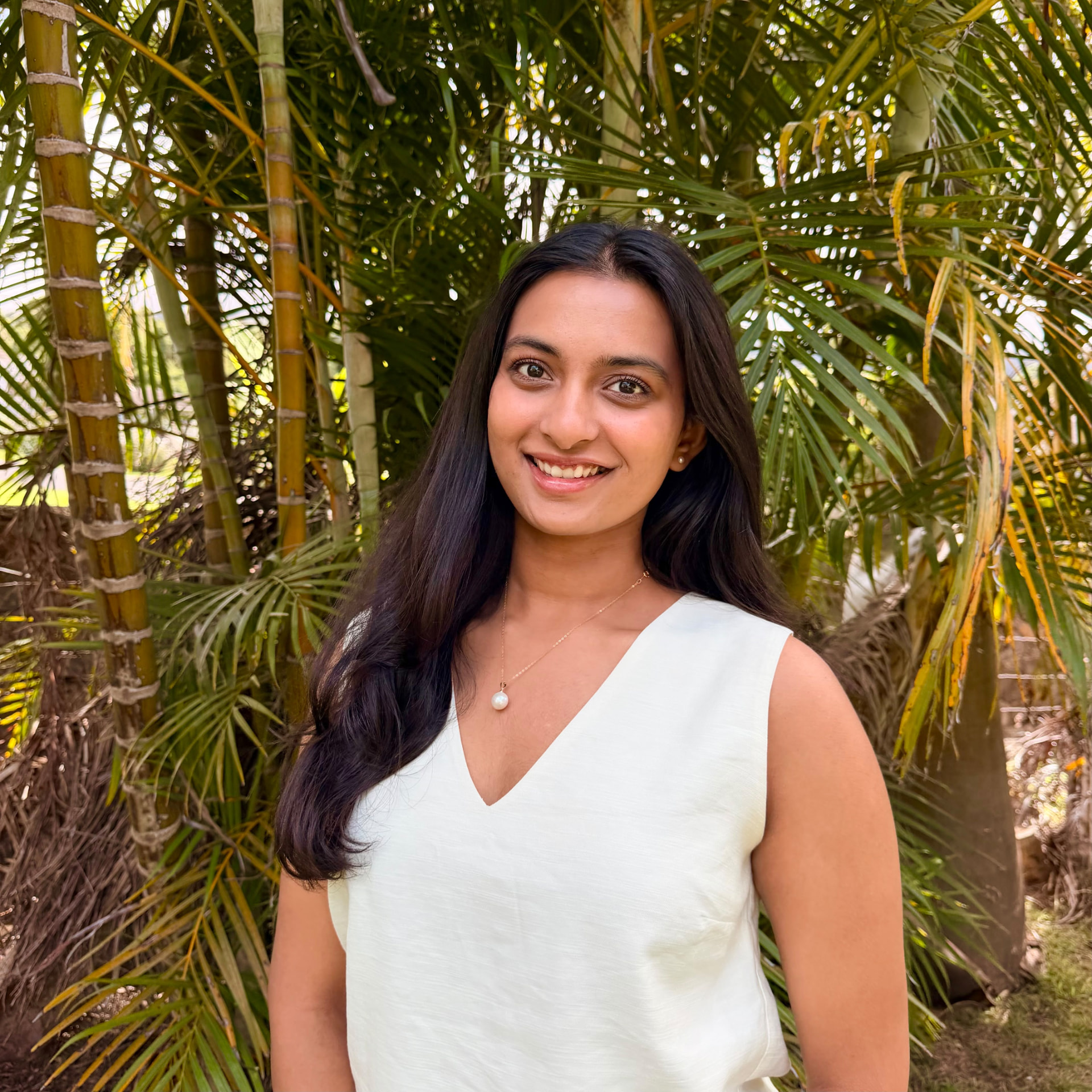
Founder
Mansa Devaki
BA Neuroscience, UC Berkeley
I'm deeply interested in how we can shift healthcare toward prevention, equity, and whole-person care, especially when it comes to brain health. Studying neuroscience at Berkeley kept pointing me at the same gap: we wait until someone is in crisis before we invest in their mind, when so much of what protects the brain is connection, purpose, and stimulation long before that.
Growing up on Maui, I saw how access to care is shaped by geography, culture, and resources. Kūpuna here can live a long way from a specialist, and loneliness doesn't show up on any chart. That perspective is why Mālama the Mind looks the way it does: students and kūpuna at one table, talking story and playing word and number games, in a place kūpuna already call home.
I care about building something that isn't only scientifically grounded, but also accessible, culturally relevant, and community-driven, led by the people who live here.